Tuesday, April 9, 2024

5 Fresh, New Ways to Feature Strawberry

As temperatures rise, now is a great time to start experimenting with fresh ideas. This week, we’re bringing a burst of fresh flavor by sharing five ways to feature strawberry in your spring and summer product lineup.

Strawberry Peanut Butter Cups
Put a fresh spin on the classic peanut butter cup with the addition of freshly slice strawberries. Click here for a recipe from California Strawberries.

Matcha-Covered Strawberries
Perhaps an unexpected twist on chocolate-covered strawberries, the addition of matcha powder to the white chocolate is sure to pique customer interest.


Photo credit: Bridgewater Chocolate

Chocolate Strawberry Pearls
With the slight crunch of dried strawberry in the center of layers of white chocolate and strawberry-flavored chocolate, these delicate pearls made by Bridgewater Chocolate are an elegant way to showcase strawberries.


Photo credit: Taste of Home

Strawberry Pretzel Bark
Here’s a new take on the summertime classic, strawberry pretzel dessert. With its natural berry notes, ruby chocolate is a natural fit for pairing with strawberries.


Photo credit: Milk Bar

Strawberry Shortcake Truffles
Combining all the creamy, salty, buttery, fruity, unforgettably tasty flavors of strawberry shortcake in a single bite, Milk Bar’s strawberry shortcake cake truffles are made with strawberry-studded vanilla cake, soaked in strawberry milk and rolled in strawberry shortcake crumbs. Milk Bar’s founder and television personality, Christina Tosi, shares her recipe here.

As fresh strawberries begin popping up in farmers markets, take advantage of your local harvest. Even if you don’t follow some of these recipes exactly, use them as inspiration to create a recipe that is totally unique to your brand!

Registration is now available for RCI’s 2024 Annual Convention & Industry Expo! Register now and join us in Buffalo, New York June 17-21, 2024! Save with early-bird rates available through April 26, 2024.

Crave more? Click here to subscribe and start receiving weekly tips, like this, delivered straight to your email inbox. RCI's blog is just one of the many resources we offer to help candy makers refine their craft and build upon their business and marketing practices. Follow us on Facebook for even more sweet inspiration.

Not a member? Click here to learn how RCI can help you build your sweet business.


Tuesday, April 2, 2024

Troubleshooting Seeing Stars in Fudge & Pralines

Are you tired of your candies sporting mysterious white splotches on their surface, commonly described as “stars?” RCI member Randy Hofberger of R&D Candy Consultants explains that the culprit behind these white splotches on the surface of grained confections like fudge and pralines is uncontrolled sugar graining. Taking control of sugar crystallization will not only improve the appearance of your products, but also contribute to a smoother mouthfeel by achieving a smaller crystal size.

So, how can you regain control over sugar crystallization?

FUDGE

There are several different ways to develop a grain in fudge. Influencing factors include the formula, temperature, process and time. While there can be many ingredients in a fudge formula—the ratio of sugar to syrups (aka doctoring agents, such as corn syrup, invert syrup, sorbitol, etc.) controls the rate of crystallization and to some extent crystal size. Basically, you need more sucrose solids than syrup solids to cause a grain. The higher the syrup percentage, the longer it will take to grain and the smaller the crystal size. It is difficult to control crystallization with a formula containing little or no syrup.

The two most common methods of graining fudge are:

1. Adding 10-20% fondant at a temperature below 175- 180°F to induce a grain. Transferring the cooked syrup to a cold kettle and adding chocolate liquor will help to cool down the mass. Lower percentages of fondant or hotter temperatures can result in uncontrolled sugar crystallization.

2. Mechanically developing a sugar crystal. For this method, the hot cooked mass is cooled to about 110-125°F, undisturbed before agitation begins. Agitation may be the mixing action of a cream beater or the working action of scrapers and paddles on a table—à la Mackinac Island fudge. Working the fudge at hotter temperatures can make a grainy, coarse textured fudge rather than one that is creamy and melt-in-your-mouth smooth.

PRALINES

Pecan pralines are also subject to having white spots on the surface. This is discussed in Walter Richmond’s book, Choice Confections. Many of the same issues and solutions used in fudge can be applied to pralines. More corn syrup in the formula will reduce spotting, but it will make the pieces less tender. As with fudge, the cooked mass should be cooled before starting the graining process. Most pralines are grained by rubbing the paddles on the side of the kettle until mixture appears cloudy. There is a little art involved and if done excessively the pralines will become sugary in appearance and texture. Another way of developing smooth sugar crystallization is to add fondant after it has been cooled.

A common challenge with pralines is when the last portion in the kettle becomes thick and over grained. Placing or nesting your kettle within another kettle will help to reduce heat loss and allow more time to deposit praline clusters before thickening occurs. Furthermore, nesting your kettle in another kettle with hot water will extend this time even more.

As mentioned earlier, formula, temperature, process and timing all affect the tendency of spotting to occur. While a night sky full of stars is good—candies dotted with stars is not!

Registration is now available for RCI’s 2024 Annual Convention & Industry Expo! Register now and join us in Buffalo, New York June 17-21, 2024! Save with early-bird rates available through April 26, 2024.

Crave more? Click here to subscribe and start receiving weekly tips, like this, delivered straight to your email inbox. RCI's blog is just one of the many resources we offer to help candy makers refine their craft and build upon their business and marketing practices. Follow us on Facebook for even more sweet inspiration.

Not a member? Click here to learn how RCI can help you build your sweet business.

Tuesday, March 26, 2024

Sparkling Solutions: Cleaning Gas Stove Burners for Candy Perfection

When cooking confections in a kettle, inevitably there will come a time when those sticky, goopy substances make their way onto the burner. However delicious, these spills can cause your gas stove to produce weak or uneven flames.

Often small spills accumulate little by little over time and it may not be immediately clear to a
candy maker why their gas stove isn’t performing properly. According to Jacques De Waele at Savage Bros. Co., this is a common problem. The efficiency of your gas stove depends on keeping the burner jets clean. And while general maintenance and cleaning is covered in the manual provided with your gas stove, Jacques also pointed out that unfortunately manuals are often lost or misplaced when needed most. If you have misplaced your manual, consider asking your equipment supplier for a replacement copy.

Savage Bros. Co. recommends periodic general cleaning to keep your gas stove in top operating condition. According to their manual, lint and grease, normally suspending in the air, tend to collect in air passages within the burners. For that reason, all air passages and openings, burner ports, etc. should be periodically cleaned to prevent clogging.

Dirt and Lint Buildup

The color of the flame can be an indicator that your gas stove needs cleaning. If the pilot flame on your gas stove burns yellow, rather than blue, it may be an indication that dirt or lint has covered the lower portion of the pilot burner. This can be removed with a soft brush or by vacuuming.

If there is a wide variation in the color of flame from the jets, this may also be an indication that the jets need cleaning. For reference, natural gas flames should be a concentrated blue color, but liquid propane will appear yellow in color.

Grease and Food Spatters

To remove grease and food spatters that have baked on the equipment, apply cleanser to a damp sponge or cloth and rub the cleanser in the direction of the polishing lines on the metal. Rubbing cleanser as gently as possible in the polished lines (not in a circular motion) will not mar the finish of the stainless steel.

Burnt Deposits

If the aforementioned method does not work for burnt deposits, these can usually be removed by rubbing the surface with a Scotch-Brite™ scouring pad or other stainless steel scouring pad. Savage Bros. Co. advises against using ordinary steel wool to clean equipment.

Stubborn Blockages

Savage Bros. Co.’s Beata Corson offered the following tips for clearing out stubborn blockages. "Individual burner jets can be unscrewed and removed from the burner for proper cleaning." She suggests soaking jets in warm, soapy water (Dawn Dish Soap works well) and removing obstructions with something narrow, like a paper clip or straight pin. Make sure burner jets are dry before reattaching them to the burner. These steps will ensure you don’t have to purchase replacement parts—although that is an inexpensive option, if needed.

Cleaning the burner of a gas stove can help ensure the long useful life of the equipment and performance of the stove. Apply these tips to your regular cleaning routine to enjoy safe and efficient use of your gas stove for many years to come. 

Registration is now available for RCI’s 2024 Annual Convention & Industry Expo! Register now and join us in Buffalo, New York June 17-21, 2024! Save with early-bird rates available through April 26, 2024.

Crave more? Click here to subscribe and start receiving weekly tips, like this, delivered straight to your email inbox. RCI's blog is just one of the many resources we offer to help candy makers refine their craft and build upon their business and marketing practices. Follow us on Facebook for even more sweet inspiration. 

Not a member? Click here to learn how RCI can help you build your sweet business.

Tuesday, March 19, 2024

5 Ways to Transform Your Treats for National Peanut Butter & Jelly Day

Get ready to spread the love for National Peanut Butter and Jelly Day on April 2nd! Keep reading for 5 ways to put a creative spin on your existing confections with a PB&J makeover! It's the perfect time to toast to this iconic duo of flavors--plus, you might even discover a new customer favorite!

Photo credit: Mindy’s Munchies

Peanut Butter Cups

Put a twist on the traditional peanut butter cup by adding a generous layer of grape or strawberry jelly on the inside.


Photo credit: Landies Candies

Chocolate-Covered Pretzels

Transform your chocolate-covered pretzels by filling them with your favorite jelly filling before drenching them in peanut butter confectioners coating.  

Photo credit: Peter’s Chocolate®

Truffles

Rich and creamy peanut butter filling and ooey gooey raspberry jam come together in this yummy peanut butter and jelly truffle recipe from Peter’s Chocolate. Click here to view the recipe.

Photo credit: Shugary Sweets

Fudge

Add swirls of strawberry preserves into your homemade peanut butter fudge for the perfect collision of PB&J and fudge.

Photo credit: Zanders

Trail Mix

For your PB&J on the go, mix any combination of roasted peanuts, dried strawberries pieces, raisins, peanut butter chips, mini peanut butter cups and peanut butter filled pretzel nuggets for a nostalgic trail mix.

In celebration of National Peanut Butter and Jelly Day, let your creativity flow and experiment with incorporating the timeless combination of peanut butter and jelly into your candy creations. Your customers are sure to appreciate the unique and delicious treats you bring to life!

Crave more? Click here to subscribe and start receiving weekly tips, like this, delivered straight to your email inbox. RCI's blog is just one of the many resources we offer to help candy makers refine their craft and build upon their business and marketing practices. Follow us on Facebook for even more sweet inspiration.

Not a member? Click here to learn how RCI can help you build your sweet business.

Tuesday, March 12, 2024

10 Variations for your Peanut Butter Meltaways

For many confectioners, the peanut butter meltaway is a popular mainstay in their product line. If you have lots of customers who love your peanut butter meltaways, chances are they will perk up when you add a twist to this classic. We're not suggesting you change your recipe, but simply sharing inspiration to add to your collection of peanut butter confections.

Roasted Peanuts
This may seem obvious. Just as there are jars of creamy peanut butter and crunchy peanut butter at the grocery store, why couldn’t there be creamy and crunchy varieties of peanut butter meltaways? If you already make your peanut butter meltaways with chunks of peanuts, consider adding a smooth variety to your product lineup.

Crispy Rice Cereal
Candy makers have been adding crispy rice cereal to their peanut butter balls for decades. Consider this variation a nod to yesteryear or, better yet, blow their minds by experimenting with chunks of Rice Krispies Treats® added to your recipe.

Graham Crackers
Adding graham cracker crumbs will create a firmer texture and a different, yet familiar, flavor variation. Some say this addition makes peanut butter meltaways taste more like Reese’s Peanut Butter Cups®.

Sea Salt
Add course-ground sea salt to your peanut butter center for crunch and sprinkle on top to achieve crave-worthy saltiness, plus it just looks good!

Flour Salt
RCI member and Chocolate Boot Camp© instructor, Randy Hofberger, uses fine flour salt in his recipe for peanut butter meltaways. In case you're not familiar with this ingredient, flour salt has been pulverized to achieve an ultra-fine, powdery consistency. This ingredient will enhance the peanut flavor while maintaining a super smooth, velvety texture.


Photo credit: Callebaut

Feuilletine Flakes
These crispy little wafers are sure to elevate your peanut butter meltaways. They can also be used for a simple, yet sophisticated garnish.

Banana Chips
Adding chunks of dried banana chips to your meltaways will deliver both crunch and flavor. If you’re really adventurous, experiment with adding banana chips and crispy bacon bits as an homage to Elvis Presley's favorite sandwich.

Marshmallow
Let your inner child lead the way! This could be a layer of marshmallow, marshmallow fluff or mini marshmallows…better yet, Lucky Charms® mini marshmallows.

Vanilla + Almond Extract
Boost the nuttiness of your recipe by adding a splash of almond extract, along with the vanilla.

Quinoa
The addition of puffed crispy quinoa will bring with it a satisfying crunch, plus a halo of health benefits. Consider ways to make this option even more appealing to health-conscious consumers, such as reducing the sugar and covering in dark chocolate.

We hope this week’s post helps spark your creativity and allows you to go a little nuts with new variations to your peanut butter meltaway recipe.

Crave more? Click here to subscribe and start receiving weekly tips, like this, delivered straight to your email inbox. RCI's blog is just one of the many resources we offer to help candy makers refine their craft and build upon their business and marketing practices. Follow us on Facebook for even more sweet inspiration.

Not a member? Click here to learn how RCI can help you build your sweet business.

Tuesday, February 27, 2024

Quick Tip: No pre-bottomer? Try this!


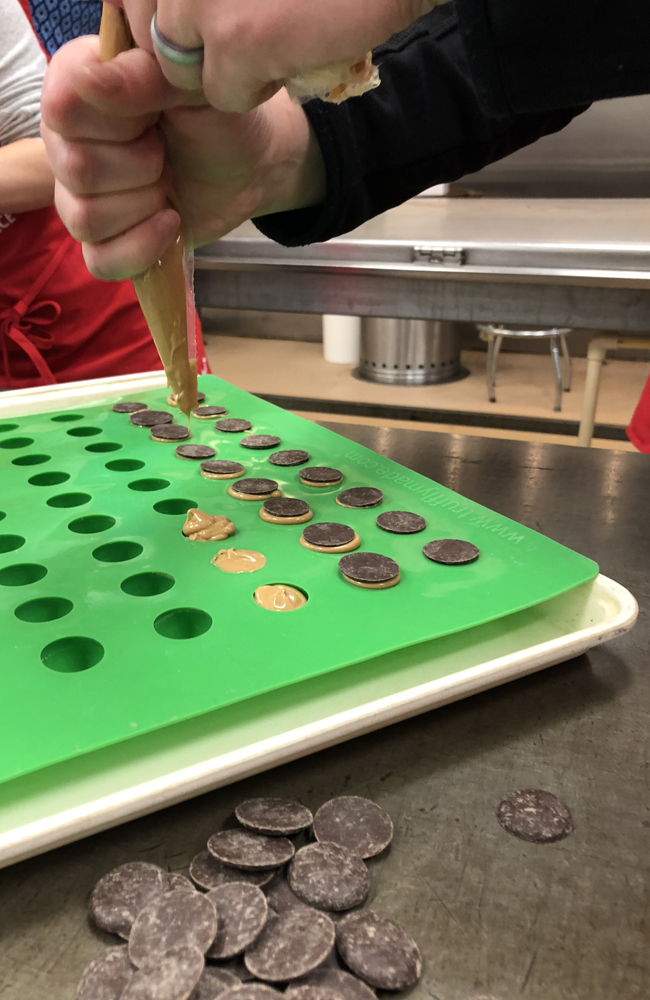
No pre-bottomer? No problem! With RCI Chocolate Boot Camp course taking place this week, we’re sharing a quick and easy solution, demonstrated by one of our instructors, Joe Sofia with Cargill Cocoa & Chocolate, for candy makers who do not have a pre-bottomer on their enrober.

This handy tip uses chocolate wafers as the pre-bottom for, in this case, moulded peanut butter meltaways. Joe explained, "When you pop the meltaways out of the mould, they are ready for full enrobing since the wafer will adhere to the meltaway." Joe also added that it's important to apply the chocolate wafer while the center is still liquid so the two stick together.

For this demonstration, a 22-millimeter silicon dome mould from Truffly Made was a perfect fit when using a standard chocolate wafer as the base.

If you’re interested in more insider tips like this, consider attending RCI’s Truffles + More course August 12-14, 2024 in Erie, Pennsylvania. Save the date and stay tuned for more details coming soon at retailconfectioners.org/events.

Crave more? Click here to subscribe and start receiving weekly tips, like this, delivered straight to your email inbox. RCI's blog is just one of the many resources we offer to help candy makers refine their craft and build upon their business and marketing practices. Follow us on Facebook for even more sweet inspiration.

Not a member? Click here to learn how RCI can help you build your sweet business.

Tuesday, February 20, 2024

Irish Potato Candy for St. Patrick’s Day

This may come as a surprise, but Irish potato candy did not originate in Ireland, nor does it typically contain potato. These miniature potato wannabes are often made with cream cheese or a coconut-flavored cream filling moulded into the size of a small potato and rolled in cinnamon and/or cocoa, giving the illusion of a dirty potato.

Despite any likely link to Ireland, these deceiving little candies can help create interest within your customer base and social media followers, while being relatively easy for many candy makers to incorporate into their product line leading up to St. Patrick’s Day on March 17. 

Check out this video to see how RCI member Marie’s Candies makes Irish potato candy.

Interested in trying your hand at making these sweet "potatoes?" Try the following recipe for Irish Potato Candy courtesy of Peter’s Chocolate® by Cargill Cocoa & Chocolate.

Photo credit: Peter’s Chocolate®/Cargill Cocoa & Chocolate

Irish Potato Candy

  • 44 oz. Peter’s® White Icecap® Confectionery Coating
  • 12.5 oz. Irish cream liqueur
  • 2.5 oz. corn syrup
  • 2 oz. each powdered sugar, cinnamon and cocoa powder

Blend together powdered sugar, cinnamon and cocoa powder. Set aside. Melt white confectionery coating to 100°F. Heat Irish cream and corn syrup together to 90 F. Whisk melted coating into cream/corn syrup mixture until well mixed. Allow to cool to room temperature. Portion with a #70 scoop and roll into potato shapes. Immediately roll into powder mixture. Yield: Approximately 72 pieces

There are lots of different ways to put your own spin on Irish potato candy. Click here for inspiration from RCI members in a past RCI Blog post. 

Spread the luck o’ the Irish this St. Patrick’s Day by sharing these humble, but tasty spuds with your customers.  

Crave more? Click here to subscribe and start receiving weekly tips, like this, delivered straight to your email inbox. RCI's blog is just one of the many resources we offer to help candy makers refine their craft and build upon their business and marketing practices. Follow us on Facebook for even more sweet inspiration.

Not a member? Click here to learn how RCI can help you build your sweet business.

Tuesday, February 6, 2024

5 Super Simple Valentine’s Day Gifts for Kids & Teens

We all know Valentine’s Day isn’t all about romance. Many shoppers will also be looking for gift ideas for the kids in their life, which is why we’re sharing inspiration for fun and easy gift ideas that are sure to make any kiddo feel the love this Valentine’s Day.


Photo credit: Nandy’s Candy

Valentine Bento Box

The perfect gift for young friends, teens and candy lovers this Valentine’s Day! RCI member Nandy’s Candy fills stock Valentine boxes with an assortment of individually wrapped treats, such as chocolate-covered sandwich cookies and foil-wrapped chocolates, but also small heat-sealed bags of conversation hearts, gummies and hard candies come together as a small sampler of treats. 

Chocolate Tic-Tac Toe

Win shoppers’ hearts with this clever chocolate tic-tac-toe board! RCI member Water’s Edge Chocolates has transformed a chocolate-covered graham cracker into a miniature tic-tac-toe board, packaged with chocolate heart pieces and a cute, coordinating gift tag. This concept could also be applied to square chocolate bars or chocolate-covered crispy rice treats as the board, while conversation hearts or jelly beans could also be used for the game pieces.

Photo credit: Reids Chocolate

Chocolate Grams

Make it easy for families with kids to show their love by creating ready-to-gift valentines with the chocolate already included. Create and print your own custom Valentines on card stock before attaching your chocolate lollipops. Not only will these generate interest in store and on social media, they also add value for many busy families. RCI member Reids Chocolate sells assorted styles of their “Choc-o-Grams” individually or as a 4-pack. For ease, it is noted for online customers that assorted styles are selected at random.


Photo credit: Marie’s Candies

Chocolate Heart Necklace

This chocolate heart necklace is just about as simple as it is sweet! RCI member Marie’s Candies carefully crafts these necklaces out of two foiled chocolate hearts (back to back) and a festive ribbon to be sold separately or added to Valentine bundles for kids. What little one wouldn’t love to wear this necklace with pride…even if it doesn’t last very long?!


Photo credit: HGTV

Chocolate-Dipped Fortune Cookies

There’s something fun and nostalgic about opening up a fortune cookie as a child. For something unexpected dip fortune cookies in chocolate and package them in a cute take-out container, which can be found at most craft shops.

Consumers with kids in their life are sure to fall in love with these adorable treats this Valentine's Day! Make sure to share plenty of photos of your Valentine’s Day treats on social media and your e-commerce site for greater exposure and sales potential. If you plan to make a small batch of these fun treats, let consumers know they’re available for a limited-time only in your social media posts and your online store. This will cover you if you do sell out (we hope you do!) and also encourage shoppers to buy by creating a sense of urgency. Make note of the quantities you made and sold to help determine whether to bring them back this time next year.

Crave more? Click here to subscribe and start receiving weekly tips, like this, delivered straight to your email inbox. RCI's blog is just one of the many resources we offer to help candy makers refine their craft and build upon their business and marketing practices. Follow us on Facebook for even more sweet inspiration.

Not a member? Click here to learn how RCI can help you build your sweet business.